
The Therapy Dog Formula Blueprint™
Prepare your dog–handler team for safe, ethical and sustainable participation in Animal-Assisted Services
Online Course | Lifetime Access | Professional Support | CPD Certified

A dog can be friendly, sociable and well trained — and still not be appropriately suited to every Animal-Assisted Services role.
Successful AAS work depends on much more than teaching behaviours.
You need to understand:
The Therapy Dog Formula Blueprint™ has been designed to bring all of these elements together.
The goal is not to prepare every dog for every possible environment.
The goal is to develop an appropriate and sustainable Role–Team Match.
This programme is suitable for people wishing to prepare a dog–handler team for work in settings such as:
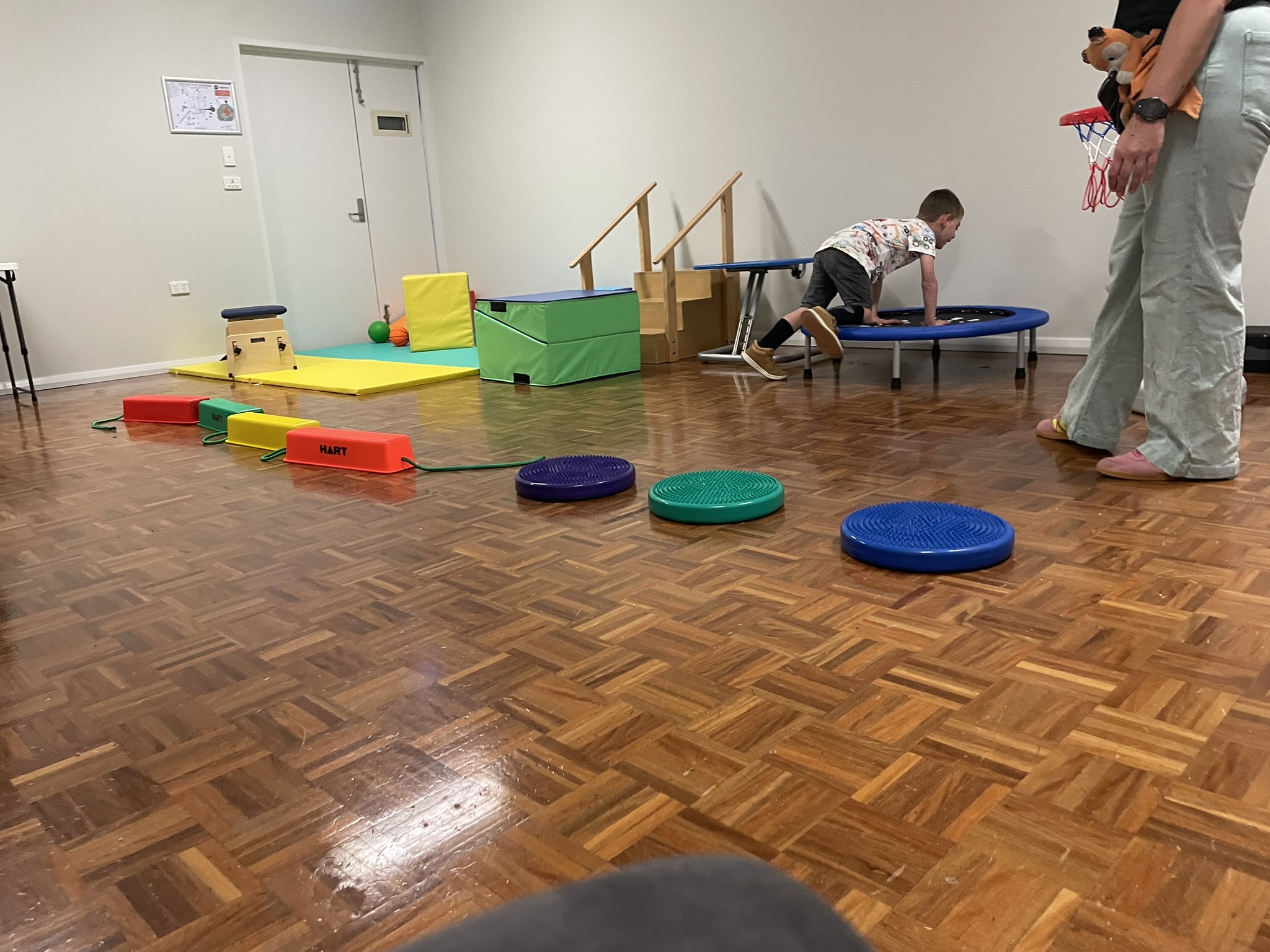 Schools and educational environments.
You do not need to be an allied health professional to undertake the programme.
However, the course will help you clearly understand the difference between your professional scope of practice and the role performed by your dog.
Rather than preparing dogs against a generic idea of what a “therapy dog” should tolerate, the programme teaches you to consider the specific role your team intends to undertake.
Your preparation is considered across four connected areas:
🏢 Role Demand Profile
What will the proposed role actually require?
We consider the working environment, participants, activities, interaction, workload and any essential or modifiable demands.
🐕 Dog Capacity
How does your dog respond to the demands relevant to that role?
Dog Capacity is considered across:
🤝 Handler Skill & Advocacy
You will learn how to:
Observe → Interpret → Decide → Act → Review
The handler is an active part of the team and has an important role in supporting both the dog and the people participating in the service.
❤️ Welfare & Sustainability
Can the proposed work remain appropriate for your dog over time?
The programme considers workload, recovery, changing capacity, long-term welfare and when a role may need to be modified.
You will also become a member of our community
🐾 Welcome to The Therapy Dog Formula Blueprint™
📝 Current Terminology in Animal-Assisted Services
🐕🦺 Responsibilities of an Animal-Assisted Intervention Dog
🐾 Understanding Role Demands in Animal-Assisted Services
🐾 What Is a Role Demand Profile?
🏢 Recognising How Different Environments Influence the Demands Placed on a Dog–Handler Team
🤝 Understanding Participants & Activities
📋 Essential & Modifiable Role Demands
🧩 Bringing It Together – Understanding Your Proposed Role
Role Demand Profile Checklist
Test Your Knowledge
🤝 Laying the Foundations
🐾 Understanding Animal Welfare
🐾 Consent vs Compliance: Recognising Willing Participation
🧩 Standards & Good Practice in Animal-Assisted Services
🐾 Putting Welfare Into Practice During Training
🛡️ Making Welfare-Centred Decisions
Test your knowledge
Canine Communication & Dog Capacity
Body Language
🐕 Tails Tell a Story
Weight Distribution
Facial Expressions part 1
Facial Expressions part 2
👃 Olfactory Communication: Understanding the Dog’s World Through Scent
🔊 Understanding Canine Vocalisations: What Are Dogs Really Saying?
🐕 Breed Influences on Vocal Communication
Defensive Barking
😕 Displacement Behaviours: A Clue to Inner Conflict
🤲🤝 Tactile Communication: Understanding the Power of Touch
🧠 Understanding Arousal in Dogs
🐾 Supporting Arousal & Emotional Regulation
🐾 Applying Canine Communication to Animal-Assisted Services
🧠 Understanding Ethology: A Scientific Lens on Canine Behaviour
🐾 The Origin of Dogs: Understanding Domestication
🌍 How Dogs Adapted to Environments Around the World
Where did the dog come from?
🐶 The Seven Dog Breed Groups
Characteristics
Providing Education According to Breed
🐾 Choosing a Dog: Puppy vs. Adult Dogs
🐾 Choosing a Dog: Rescue or Purpose-Bred?
🐕 Breed Characteristics & the Proposed AAS Role
🩺 Health & Genetic Considerations for Dogs Participating in AAS
Test your knowledge
🧠 How Your Dog Learns
🧠 What Is Behaviour—and How Does It Occur?
🧭 The Role of Management in Kind, Effective Dog Training
🔄 Habituation
⚡ Sensitisation
🎓 Operant Conditioning
⚖️ Understanding the Law of Effect in Dog Training
Four Quadrants to Behaviour
🔗 Respondent Conditioning
🔄 Understanding Extinction in Dog Training
Test your knowledge
🎥 Clicker Training: Understanding the Marker
Introducing your dog to the clicker
Easy Exercise to practice your clicker skills
Adding another dimension to the behaviour

Your enrolment includes:
✅ Comprehensive online AAS education.
✅ Practical dog-training instruction.
✅ Reinforcement-based training methods.
✅ Role Demand Profile preparation.
✅ Dog Capacity education.
✅ Handler Skill & Advocacy development.
✅ Welfare and sustainability guidance.
✅ Health and safety education.
✅ Knowledge assessments.
✅ Downloadable resources and templates.
✅ Practical training demonstrations.
✅ Private course community.
✅ Opportunities to submit training videos and ask questions.
✅ Lifetime access to the course.
✅ Future course and video updates as they are added.
✅ A structured pathway towards PATS practical assessment and certification.
This is not simply a collection of theory lessons.

 Professional preparation involves more than simply reading course content.
Knowledge assessments are included throughout the programme to help you demonstrate that you can understand and apply the principles being taught.
Questions include realistic scenarios covering areas such as:
These assessments form part of the preparation pathway towards PATS practical assessment.
The Therapy Dog Formula Blueprint™ gives you a clear pathway from learning and practical training through to professional assessment and certification.
Throughout the programme, you will develop the knowledge and practical skills needed to prepare your dog–handler team for the specific Animal-Assisted Services role you hope to undertake.
When you and your dog are ready, you can progress to a PATS practical assessment, where your team is assessed in relation to your proposed role, working environment and the type of participation expected.
This means you are not simply being asked whether your dog can “pass a therapy dog test”.
Instead, the assessment considers whether you and your dog are appropriately prepared to work together in the role you actually intend to undertake.
Learn → Train → Prepare → Assess → Certify
Practical assessment and certification are separate professional services and are not included in the course fee.
PATS certification is reviewed annually to help ensure the role continues to remain appropriate, safe and sustainable for the dog–handler team.
No. Completion of the course provides the knowledge and training pathway needed to prepare your team, but certification requires a separate practical assessment. Not every dog will be suited to every proposed AAS role, and no ethical programme can guarantee certification before assessing the individual dog, handler and role.
Dogs must be at least 12 months of age before formal PATS practical assessment. The dog and handler must also have an established working relationship before assessment. You can begin appropriate foundation education and training before your dog reaches assessment age.
No. Not all AAS activities require physical interaction. The type and amount of contact expected should reflect the proposed role, the participant, and the individual dog's comfort and willingness to participate.
No. PATS uses a role-specific approach. Your dog needs to demonstrate appropriate capacity for the conditions relevant to the role you actually intend to undertake.
Yes. The course itself is online and can be completed from anywhere. Approved practical assessment pathways are available for teams who cannot attend an in-person assessment with PATS.
No. Practical assessment and certification are separate professional services and are charged separately.
Yes. PATS certification is reassessed every 12 months. An earlier review or reassessment may be required where there has been a significant change to the dog, handler, role, environment or working arrangements.
Yes. You will have access to the course community, where you can ask questions, discuss your progress and submit training videos for feedback
You now receive lifetime access. This includes future updates and additional course resources as they are added.

What some of our students say!



The Therapy Dog Formula Blueprint™ is designed for people who want to do more than simply take their dog into a helping environment.